Smart Bedroom Design for Dubai Homes
Photographing well is not enough for a bedroom in Dubai: it has to deliver deep, cool rest in a city where the sun is relentless for much of the year. The best rooms combine a calm look with practical answers to heat, glare, and the compact footprints of tower apartments. A leased one-bed in Jumeirah Beach Residence or a villa master suite in Arabian Ranches, either way, the core principles do not change. The suggestions below are arranged so you can pick and mix rather than follow a rigid formula. Every idea links a design goal to a buildable suggestion plus a sense of what it costs in 2026. Each number is a ballpark, because finish level and furniture brand swing the totals widely. Read them in order or skip to the ones that suit your home and budget.
1. Set Up Layered Lighting
One overhead ceiling light flattens the whole bedroom and adds nothing to the atmosphere, so layering is the first upgrade worth making. Start with ambient light from recessed spots or a soft pendant, then task lighting by the bed, and finish with accent light to wash a wall or highlight art. Dimmers are essential in Dubai, giving bright, functional light while dressing, then a soft, warm glow late at night. Swing-arm wall lights by the bed clear the side tables and let you read without lighting everything. Warm colour temperatures around 2700K feel restful; anything too cool reads clinical in a space meant for sleep. A modest lighting refresh usually lands between AED 3,000 and AED 12,000 in 2026, depending on fittings and whether the wiring changes.
2. Opt for a Heat-Smart Colour Scheme
Colour tunes the emotional temperature of a bedroom, and in Dubai it can influence the perceived heat of the room too. Warm white, sand, oat, and pale clay are soft, light-reflecting tones that keep spaces feeling cool and open under strong homeinteriordesign.ae/services/villas-design/ daylight. Instead of soaking up light like dark walls, these neutrals bounce the abundant natural light deeper into the room. Texture and tonal variation, not loud colour, create the depth, matching the quiet-luxury direction shaping local interiors in 2026. Richer accents, if you want them, are best brought in through cushions, throws, and a headboard you can change cheaply later. As a reliable starting point, the palette below flatters both apartments and villas.
- On the walls: warm white, oat, or pale clay to bounce light and calm the room.
- Linen: stacked whites and gentle neutrals with a single muted accent.
- For accents: terracotta, sage, dusty blue, or bronze in small, swappable doses.
- Timber: light oak, or walnut bringing warmth to the pale scheme.
3. Take Solar Control and Blackout Seriously
Dubai’s light is a blessing for living spaces but no friend to a good lie-in, so window dressing is non-negotiable in a bedroom. Put a blackout layer first, a lined curtain, a blockout roller, or a smart blind you can close from your phone. Team it with a lighter sheer to dial down daytime glare while keeping some light. Glass lets heat in and loads your air-conditioning; so solar-control blinds serve both comfort and cost. Motorised tracks are increasingly the default since tall apartment windows are hard to reach and heavy to draw by hand. Expect a quality dual curtain-and-sheer setup to come in around AED 2,500 to AED 9,000 per window in 2026, with motorisation adding to that.
4. Add Fitted Wardrobes That Use Every Inch
In any well-run bedroom, storage is the quiet hero, and built-ins win on both capacity and calm. Full-height joinery both reclaims the dead space above standard wardrobes and keeps clutter behind clean doors. Where the footprint is already tight, sliding doors save the swing space that hinged doors steal. In a villa, a walk-in dressing room, is one of the most in-demand features locally right now. The internals: drawers, pull-outs, lighting matter as much as the doors; plan the inside before the outside. Expect built-in wardrobes at roughly AED 1,200 to AED 3,500 per linear metre in 2026, depending on finish and what goes inside.
5. Layer In Natural, Tactile Materials
One of the strongest currents running through Dubai homes in 2026 is biophilic design, the idea of connecting interiors to nature. Applied to a bedroom, it means natural textures that feel good to touch and quietly calm the nervous system at the end of the day. Think linen bedding, a wool or jute rug, rattan or cane detailing, plus timber that shows its grain rather than hiding under gloss. To soften hard corners, add a few hardy plants, ideally ones suited to air-conditioned, low-light rooms. Ageing gracefully as they do, natural materials suit the warm-minimalist mood now replacing cold, all-white schemes. Next to structural work, layering these textures costs very little, yet it transforms how restful a room feels.
6. Build a Cool, Hotel-Style Master Suite
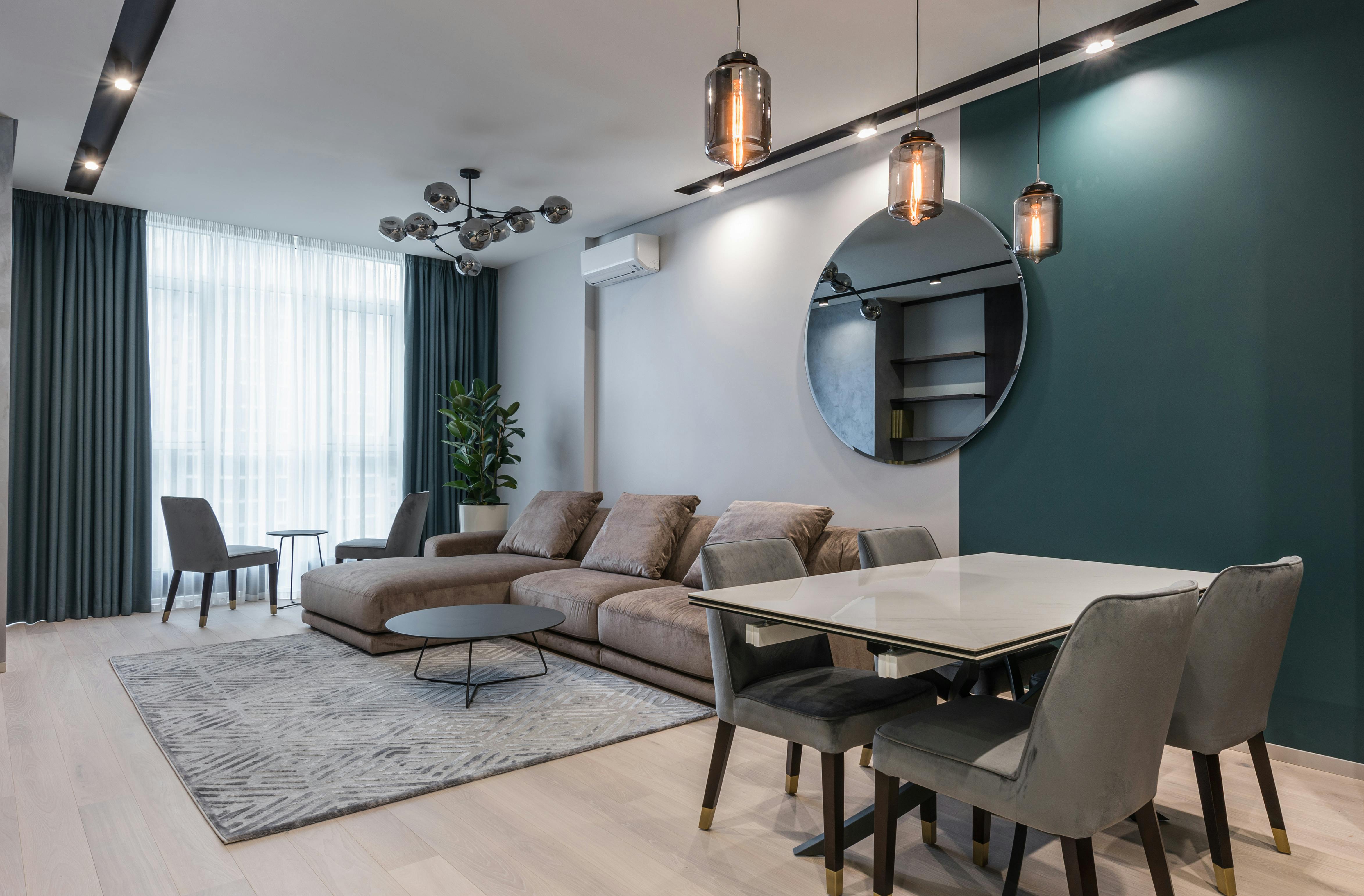
Plenty of Dubai homeowners want their bedroom to echo the five-star hotels Dubai is famous for, and it is a very achievable look. At its core, the look needs a generous upholstered headboard, symmetrical bedside lighting, crisp layered linen, and a restrained, tonal palette. An end-of-bed bench, blackout drapery and a slim console for the finishing hotel cues, minus the clutter. Small residential studios such as Muse Design, Zen Interiors, and Sneha Divias Atelier design in precisely this detail-led register across the city. Zoning a reading nook or placing a lounge chair by the window, turns the bedroom into a proper retreat where space allows. From around AED 40,000 for styling to well past AED 150,000 for a full villa suite, that is the typical 2026 range for a hotel-style master refresh.
7. Plan for Smart-Home Comfort
In Dubai’s newer buildings, smart-home integration has moved from novelty to expectation, and the bedroom is where it proves its worth. Thanks to motorised blinds, app-controlled lighting and a smart thermostat, the room readies itself for sleep at a single tap. Since timing the cooling to your sleep improves comfort and energy use, climate control is especially valuable here. Modest touches like bedside USB charging, wireless charging pads and tidy cable management take the daily friction out of devices. Since you are renovating anyway, putting the wiring in now is far less costly than adding it later behind finished plaster. A basic smart-bedroom setup usually starts around AED 6,000 and rises with the number of integrated systems in 2026.
8. Make Kids’ and Guest Rooms Flexible
Spare rooms do most when able to change roles, since needs change and guests come and go. A sofa bed or daybed lets a study moonlight as a guest room without giving over a whole room to occasional visitors. Modular furniture and adjustable shelving stretch the life of the room as they grow right through to the teenage years. Wipe-clean, durable finishes count for more here than in a show bedroom, so choose hard-wearing paints and laminates. Keep the palette calm; let colour arrive through easily changed bedding, art, and accessories. Expect a flexible secondary bedroom fit-out at AED 15,000 to AED 45,000 in 2026, depending on the joinery and furniture chosen.
Turning the Ideas Into a Budget
Pick the ideas that work for your home first, then see how they add up across different room types. The chart below bands typical 2026 spends into a light update, meaning paint, lighting, textiles and styling, versus a full redesign covering joinery and furniture. Remember these are market estimates rather than quotes: the total comes down to finish, brand and whether you hire a designer. Apartments generally cost less simply because there is less room and less scope. At the top sit villa master suites, owing to their size and the appetite for dressing rooms and premium finishes. Take the figures as a guide to priorities, money where you feel it each night, savings where you will not.
| Room | Light refresh, 2026 est. | Full redesign, 2026 est. | Where the money goes |
|---|---|---|---|
| Flat bedroom | AED 12,000–30,000 | AED 35,000–90,000 | Lighting, textiles, built-in wardrobe, bed |
| Master suite in a villa | AED 25,000–60,000 | AED 90,000–250,000+ | Joinery, a dressing room and premium furniture |
| Kids’ room or guest room | AED 10,000–25,000 | AED 30,000–70,000 | Modular furniture, durable finishes, storage |